Direct Ordering for Restaurants: What It Is, What It Costs, and When It Actually Makes Sense
Javan Calhoun — Founder of TRELVN
Direct Ordering · Restaurant Economics
A Practical Guide to Building an Ordering Channel Your Restaurant Controls
You've probably heard some version of this advice:
“Restaurants need more direct orders.”
It sounds simple.
Put an ordering button on your website. Let customers order from you instead of a delivery marketplace. Pay less in commissions.
But that explanation leaves out the most important question:
How does direct ordering actually work—and does it make financial sense for your restaurant?
Because direct ordering isn't free.
It doesn't automatically create customers.
And having an ordering page doesn't mean people will use it.
For some restaurants, however, a strong direct-ordering channel can become one of the most valuable parts of the business.
Here's how to think about it.
What is direct ordering?
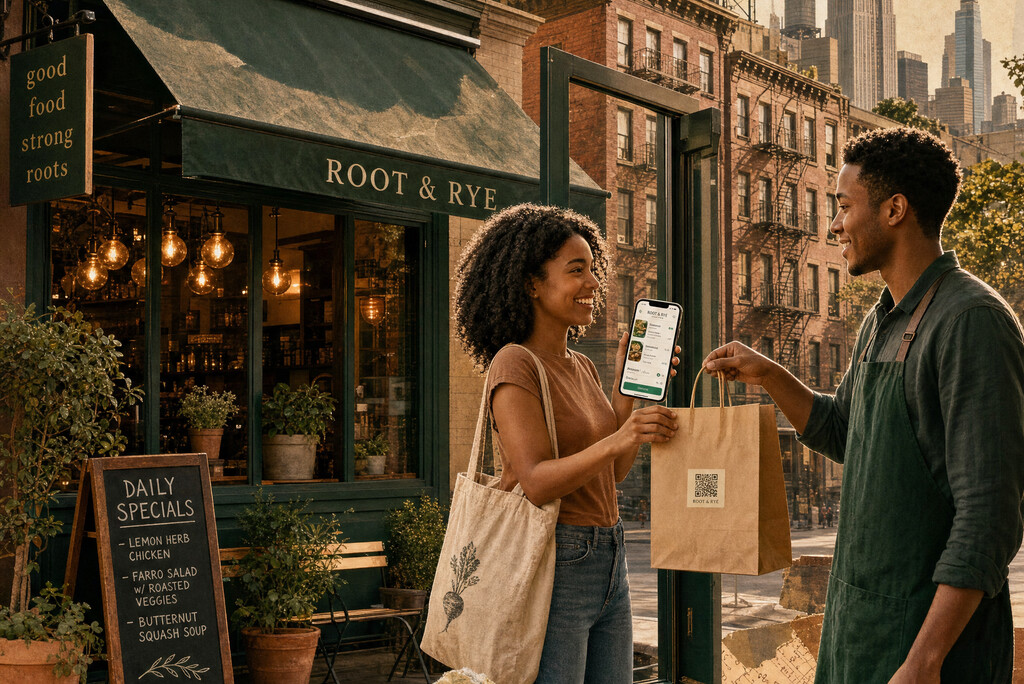
Direct ordering means a customer places an order through a restaurant's own ordering channel rather than completing the transaction inside a third-party marketplace.
That could mean ordering through:
Your restaurant website
A branded ordering page
A restaurant app
Other places—such as a Google Business Profile, Instagram profile, social post, email, text message or QR code—can serve as entry points to a direct order when they link customers to the restaurant's direct-ordering channel.
That's an important distinction.
Google, Instagram or a QR code isn't automatically a direct-ordering channel. Those entry points can also send customers to third-party marketplaces depending on where the restaurant links them.
The customer ultimately needs to complete the transaction through the restaurant's direct-ordering system for it to be a direct order.
The important distinction isn't simply where the customer first clicks.
It's where the order is actually placed and what relationship exists behind the transaction.
With a marketplace order, the customer is shopping inside the marketplace's ecosystem.
With a direct order, the customer has intentionally chosen to order through the restaurant's channel.
That's why direct ordering and marketplace ordering solve different problems.
Marketplace ordering solves discovery
Imagine someone opens DoorDash at 7 p.m. and searches:
“Caribbean food near me.”
They may have no idea your restaurant exists.
Your listing appears.
They see your food.
They place an order.
That's discovery.
And discovery has value.
Large marketplaces have spent years building consumer audiences that individual restaurants would have difficulty replicating.
A direct-ordering website doesn't automatically give you that audience.
That's one of the biggest misconceptions about direct ordering.
Installing online ordering doesn't create demand.
It gives existing and future customers somewhere to order directly once you've given them a reason to go there.
Direct ordering solves a different problem
Now imagine a different customer.
They already know your restaurant.
They've eaten your food.
Maybe they've ordered three times.
Tonight, they search your restaurant's name.
That customer doesn't necessarily need a marketplace to discover you.
They already know what they want.
This is where a direct channel becomes interesting.
Instead of requiring every digital transaction to begin through someone else's marketplace, your restaurant has another destination:
your own.
That can change the economics of repeat business.
What does direct ordering actually cost?
This is where restaurant owners should be careful with phrases like:
“commission-free.”
Commission-free doesn't necessarily mean cost-free.
Depending on the system you choose, direct ordering can involve:
- Monthly software fees
- Payment-processing fees
- Website costs
- Setup fees
- POS integrations
- Delivery fulfillment
- SMS or email services
- Loyalty tools
- Marketing expenses
- Promotional discounts
Some providers charge a flat monthly subscription.
Others provide ordering software without a monthly software charge but collect payment-processing or other applicable fees.
Some combine subscriptions with transaction or processing charges.
And marketplace companies can offer direct-ordering products of their own.
For example, DoorDash currently says its Online Ordering orders are commission-free, while payment-processing fees still apply. DoorDash says orders placed through a restaurant's own channels—including its website, social media and Google page—can flow through its Online Ordering system.
Square similarly says restaurants can take delivery and pickup orders directly through its ordering profile without marketplace commissions. Square's online payment-processing fees still apply, and if a restaurant uses on-demand delivery, a delivery-service-provider fee can also apply.
So don't evaluate a platform based solely on the phrase “zero commission.”
Ask:
What is my total cost to generate, process and fulfill a direct order?
That's the number that matters.
Run the math
Suppose a restaurant generates:
$8,000 per month in digital orders.
Now imagine, purely as an example, that one channel costs the restaurant an effective 25% of order sales.
That would equal:
$8,000 × 25% = $2,000 per month
or:
$24,000 per year.
Now suppose a direct-ordering system costs $200 per month, plus payment processing and any applicable delivery, marketing or other operating costs.
This is an illustrative example only. The $200 figure is not a quote for TRELVN or another provider.
At that hypothetical price, the software subscription itself would equal:
$200 × 12 = $2,400 per year.
But don't make the mistake of comparing:
$24,000 versus $2,400
and declaring the direct channel the winner.
Those numbers may represent two very different things.
The marketplace may be helping generate the $8,000 in sales by exposing the restaurant to its audience.
The direct-ordering system may primarily provide the infrastructure to accept orders from customers the restaurant must attract itself.
That's not an apples-to-apples comparison.
The question is not just cost. It's value.
A restaurant should evaluate each channel based on both:
What does this channel cost me?
and
What does this channel do for me?
A marketplace might provide:
Discovery
Customer demand
Delivery logistics
Payment infrastructure
Marketing opportunities
A direct-ordering platform might provide:
A branded ordering experience
Different per-order economics
Greater control over the ordering experience
Direct customer relationships, subject to consent and privacy requirements
Loyalty and retention tools
More control over promotions and marketing
Neither list automatically makes one channel better.
They're performing different jobs.
When does direct ordering start making sense?
Direct ordering becomes especially interesting when a restaurant already has customers who know the business.
Think about a neighborhood restaurant that's been operating for years.
People already:
search its name on Google,
follow it on Instagram,
walk past it every day,
have its menu at home,
recommend it to friends,
or have ordered from it before.
Those customers don't necessarily need to be reacquired every time they want dinner.
A direct-ordering channel gives those customers another way to return.
That's very different from expecting a new website to magically produce orders.
Here's a simple test
Ask yourself:
If DoorDash, Uber Eats and every other marketplace disappeared from Google tomorrow, would customers know where to order from my restaurant online?
Could they easily find:
your website?
your menu?
your hours?
your ordering button?
your pickup option?
your delivery option?
your contact information?
If the answer is no, your restaurant may have a digital infrastructure problem, not merely a commission problem.
Your business exists physically.
Your direct digital presence should exist just as clearly.
But having a direct-ordering button isn't enough
This deserves emphasis.
A direct-ordering system without a customer strategy is just software.
You still need to give customers a reason to use it.
That might mean placing your direct-ordering link prominently on your website.
It might mean optimizing your Google Business Profile.
It might mean putting QR codes on menus or receipts that point specifically to your direct-ordering page.
It might mean promoting your direct channel through social media.
It could include loyalty rewards or direct-order promotions where appropriate.
And for customers who have consented to receive marketing, it might include email or SMS communication.
The technology creates the channel.
The restaurant still has to build traffic to it.
What about customer data?
This is another area where restaurant technology companies sometimes oversimplify.
You'll often hear:
“Own your customer data.”
The reality deserves more precision.
When customers order directly, the restaurant may have access to information such as:
name,
contact information,
order history,
preferences,
frequency,
and average order value,
depending on the platform and the customer's choices.
That information can help restaurants understand their direct customers and improve the experience.
But having access to customer information doesn't mean you can automatically use it however you want.
Marketing consent, privacy requirements, platform agreements and applicable laws still matter.
So the goal shouldn't simply be:
Collect more customer data.
A better goal is:
Build a direct customer relationship—with permission.
That's more valuable anyway.
What should an owner look for in a direct-ordering system?
Don't start with the longest feature list.
Start with the problems the system needs to solve.
1. Ordering experience
Can a customer place an order quickly from a phone?
Every unnecessary step creates friction.
2. Menu management
How easy is it to change prices, items, modifiers and availability?
A beautiful ordering page becomes a liability if employees can't keep it accurate.
3. POS and kitchen workflow
Where does the order go after the customer submits it?
Does it integrate with your POS?
Does someone have to re-enter it?
Does it require another tablet?
Operational friction matters just as much as customer experience.
4. Pickup and delivery
Can customers choose pickup?
If you offer delivery, who actually delivers the food?
Your employees?
A third-party delivery network?
Another provider?
And who pays the delivery cost?
5. Payments
What are the processing fees?
How quickly do funds reach your account?
Are there additional transaction charges?
6. Customer relationships
What information does the restaurant receive from direct orders?
Can customers opt into marketing or loyalty?
Can you understand repeat behavior where reporting allows?
7. Pricing
Is it:
a flat monthly fee?
a percentage of sales?
a per-order fee?
a combination?
Are there setup, integration, delivery or marketing costs?
8. Support
When online ordering stops working at 7:30 on a Friday night, who helps you?
That question becomes much more important after you actually need the answer.
When direct ordering may NOT make sense yet
Direct ordering isn't automatically the first technology investment every restaurant should make.
Suppose your restaurant:
has very little existing customer awareness,
gets almost no website traffic,
doesn't actively maintain its Google presence,
has operational problems fulfilling current orders,
or generates almost no repeat business.
Simply installing an ordering system probably won't solve those problems.
You may need to improve discovery, operations or the customer experience first.
Similarly, if a marketplace is generating profitable incremental orders your restaurant couldn't acquire elsewhere, reducing that marketplace presence solely to avoid commissions could hurt rather than help.
The objective isn't to eliminate channels that work.
It's to understand what job each channel is doing.
Marketplace or direct ordering?
For many independent restaurants, the answer may be:
Both.
Marketplaces can help people discover you.
Your direct channel gives customers who already know your restaurant another way to come back to you.
Your marketplace presence can be one customer-acquisition channel.
Your website can be another.
Google can be another.
Social media can be another.
Walk-in traffic and word of mouth can be others.
No single company has to represent your entire digital business.
Measure whether direct ordering is actually working
After launching a direct channel, don't judge it based on whether the website looks good.
Track the business.
Look at:
Direct-order revenue
Number of direct orders
Average order value
Total direct-channel costs
Pickup versus delivery
Repeat customers, where reporting allows
Promotional costs
Marketing costs
Then calculate:
Total direct-channel cost ÷ direct-channel sales = effective direct-channel cost percentage
And use the same sales basis and comparable cost categories when evaluating your marketplace channels.
If marketplace sales exclude taxes and tips in your calculation, direct sales should be measured the same way.
If you include payment processing, delivery or promotional expenses for one channel, include comparable expenses for the others.
Otherwise, you're not comparing economics.
You're comparing accounting methods.
So when does direct ordering actually make sense?
Direct ordering becomes compelling when three things begin happening together:
Customers already know your restaurant.
You have a practical way to bring those customers to your direct channel.
The economics of serving those customers directly make sense after all costs are included.
That's when direct ordering stops being another piece of restaurant software.
It becomes infrastructure.
The goal isn't necessarily to escape marketplaces.
It's to build a business where customers have more than one way to reach you—and where your restaurant understands the purpose and economics of each channel.
Let marketplaces introduce people to your restaurant.
Make your food and service worth returning for.
And make sure customers who want to order directly have somewhere easy to go.
That's what direct ordering is really about.
About TRELVN
TRELVN helps independent restaurants build their own direct digital ordering and customer relationships.
With $0 commission on direct orders, TRELVN provides online ordering, loyalty, marketing, customer relationship and restaurant-operations tools while allowing owners to continue using third-party marketplaces where those platforms create value.
TRELVN's goal isn't to replace every channel your restaurant uses.
It's to help you build a direct channel that belongs to your business.
Would direct ordering make financial sense for your restaurant?
Use the TRELVN ROI Calculator to compare your current marketplace economics with the cost of building a direct ordering channel.
Continue Reading
What Is DoorDash Really Costing Your Restaurant in 2026? A breakdown of marketplace fees, commissions and how to compare channel economics fairly.
DoorDash’s $131.5 Million NYC Settlement: What Independent Restaurant Owners Should Know What happened, what it means—and what it doesn't mean—for NYC restaurant owners.
Sources
- DoorDash for Merchants — Online Ordering System for Restaurants — DoorDash for Merchants
- DoorDash for Merchants — DoorDash Merchant Fees & Pricing — DoorDash for Merchants
- Square — Online Ordering System for Restaurants — Square
Get articles like this delivered to your inbox
Enable JavaScript to subscribe to TRELVN article emails.